
I’m Coming to the Cottage: The Places Queer People Build When We Have Nowhere to Go – from Berlin to Baku

[Slovenský preklad nižšie]
“I’m coming to the cottage.”
Over the past year, I think we have all come across this sentence at least once, perhaps in an Instagram post, on a cardboard sign at an LGBTQ+ protest, or during Pride.
The now-famous words were spoken by Ilya Rozanov to Shane Hollander, two fictional hockey players from HBO’s Heated Rivalry, a series based on Rachel Reid’s novel of the same name. And with those five words, Ilya changed the trajectory of their relationship.
In Heated Rivalry, Ilya and Shane are two professional hockey players who fall in love with each other. However, the world they live in doesn’t exactly make it easy for them to be together. Like many queer people, they have to navigate a world where being openly themselves comes with consequences, carefully separating their public lives from their private ones.
But there is one place where they don’t have to do that: the cottage
Inside that cottage, they can finally be themselves without worrying about their careers, public perception or society’s expectations. There are no questions about two men loving each other. There is no need to explain or justify their relationship. There are simply two people who love each other, sharing intimacy and enjoying the freedom of being together.
For them, the cottage is more than just a physical place. It is a refuge where the outside world temporarily loses its power over them.
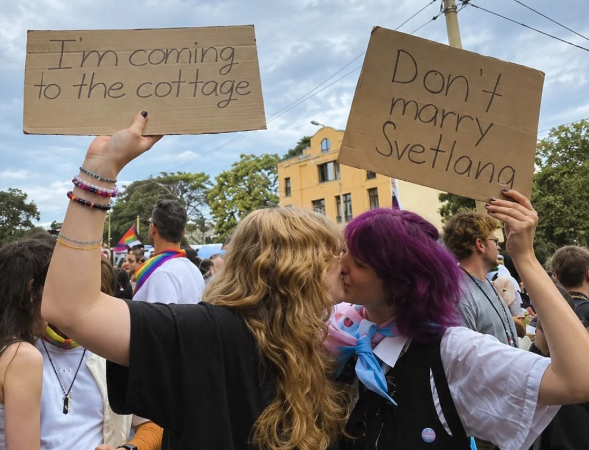
And perhaps that is something many queer people understand
Just like Ilya and Shane, queer people need places where they can feel safe without constantly thinking about how they behave, dress, whom they look at or whether someone might judge them for simply existing.
This becomes especially important in countries where homophobia is deeply rooted in society. Having a space where queer people can gather, connect and express themselves without fear is not a luxury. It is a necessity.
Throughout history, queer communities have created these spaces for themselves. Clubs, bars, underground venues and community spaces have become much more than places to socialise, offering a sense of belonging that people might not find anywhere else.
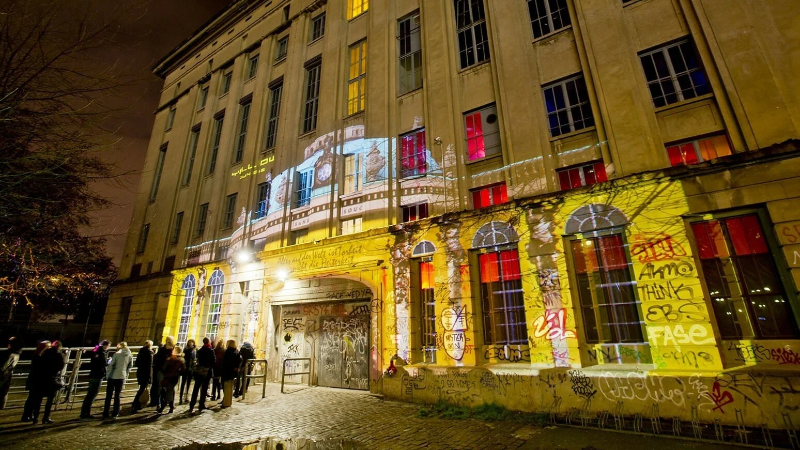
One of the most recognisable examples is Berghain in Berlin
Although now internationally famous as one of the world’s most exclusive techno clubs, its roots are closely connected to Berlin’s queer nightlife and the city’s gay community. It became a place where people could express themselves freely, away from the expectations of mainstream society. Its strict door policy, privacy rules and no-photography policy have also contributed to an environment where people can feel less exposed and more comfortable being themselves.
And when talking about places that have offered queer people a sense of safety, I cannot leave out Labyrinth in Azerbaijan.
Labyrinth
As an Azerbaijani who personally experienced this place, I can confidently say that Labyrinth was more than just a nightclub. It was one of the few queer-friendly spaces in a country where being openly queer is still far from socially accepted.
Azerbaijan decriminalised consensual same-sex relations in 2000, but legal decriminalisation does not automatically translate into social acceptance. Unfortunately, homophobia remains a significant part of everyday life for many LGBTQ+ people in the country. In an environment like this, spaces such as Labyrinth become particularly important.
I remember going there and having some of the best nights of my life
Labyrinth was a place where queer people could come together, feel comfortable and enjoy themselves without constantly worrying about being judged. Much like Berghain, it had its own atmosphere and an approach to entry that aimed to preserve the environment inside. Not everyone could simply walk in, and that selectiveness was part of maintaining a space where people could feel secure.
Inside, I met some of the kindest people. I made friendships that eventually became some of the most important relationships in my life. I remember dancing with my friends, meeting new people, drinking, getting drunk and writing something stupid on that refrigerator that everyone had written something on, laughing and listening to incredible music.
The club had different rooms, each with its own music and atmosphere. If I got bored in one room, I could simply walk into another and experience something completely different. Different lights, different sounds, different people. There was always somewhere else to go, another song to dance to and another memory to make.
I would arrive in the evening and leave at dawn
And I always felt free.
I never felt like I had to monitor myself or constantly think about how other people perceived me. I could dance, meet people, express myself and simply exist. Nobody was making my identity a problem.
Some of my favourite memories were actually made after leaving the club. My friends and I would step outside as the night came to an end and go looking for kebab or döner. We would be exhausted, probably still a little drunk, but happy. Those seemingly ordinary moments became some of my most precious memories.
When I think about Labyrinth today, I don’t just remember a nightclub
I remember the people. The friendships. The music. The freedom. And, most importantly, the feeling of being somewhere I belonged.
Because society being homophobic does not mean queer people don’t exist within it. We do. We have always existed, and we will continue to exist, regardless of whether society chooses to acknowledge us. Politicians can overlook us. Society can deny us. People can pretend that we aren’t there. None of that changes reality.
Queer people have existed for centuries
And for centuries, we have searched for, created and protected places where we could feel safe. Sometimes these places were public; sometimes they were hidden. Sometimes they were clubs, sometimes private gatherings, and sometimes simply a room where people could finally be themselves.
People often describe us as a minority. But when you are part of a queer community, when you look around a room full of people who understand you without needing an explanation, that word can feel very distant from reality. You realise just how many of us there are. We are not as invisible as society would like us to be.
That is why spaces like Labyrinth matter.
Unfortunately, last December, Labyrinth was raided by the police and subsequently closed
The owners made the decision to shut it down, prioritising the safety of the people who had gathered there. And although the doors are now closed, I don’t think the place has disappeared.
It still exists in the memories of everyone who ever wrote their names on that refrigerator, everyone who ever walked through its doors, and everyone who found a little piece of themselves within those walls. It lives on in the friendships that started there, in the nights that turned into mornings, in the music we danced to and in the feeling of being accepted without having to explain ourselves.
Perhaps this is what makes the idea of the cottage in Heated Rivalry so meaningful
The cottage represents something much bigger than a romantic getaway. It represents the freedom to love without fear, to exist without hiding and to have a place where the outside world cannot dictate who you are.
For some people, that place might be a cottage in the middle of nowhere. For others, it might be a nightclub in Berlin or a small queer-friendly venue in Baku. For me, Labyrinth was that place. And I believe that everyone deserves to have their own cottage. A place where they can take a breath, let their guard down, love whoever they want and simply be themselves.
Even when those places are taken away from us, something remains. We carry them in our memories, in our friendships and in the people we become because of them. The doors might close, but the feeling of belonging doesn’t have to. And perhaps, in one way or another, we are all still coming to the cottage.
Written by Ayan Gadimsoy
„Idem na chatu“: Miesta, ktoré kvír ľudia tvoria, keď nemajú kam ísť, od Berlína po Baku
„Idem na chatu.“
Počas uplynulého roka sme sa s touto vetou stretli azda všetci. Možno sme ju čítali na instagrame, na banneri na proteste alebo niekde na PRIDE.
Tieto, dnes už slávne slová, boli povedané medzi Ilyou Rozanovom to Shaneom Hollanderom, dvoma fiktívnymi hokejovými hráčmi z Heated Rivalry, seriálu z dielne HBO natočeného podľa rovnomennej knihy od Rachel Reid. Tieto tri slová zmenili trajektóriu ich vzťahu.
Ilya a Shane sú profesionálni hokejisti, ktorí sa do seba zamilujú. Vo svete, v ktorom žijú, to však nie je ľahké. Ako pre mnohých kvír ľudí, aj pre nich žiť otvorene znamená niesť následky. A tak skrývajúc svoj vzťah oddeľujú ich profesionálne životy od osobných.

Chata je miestom, kde sa skrývať nemusia
Dnu sa nemusia strachovať o kariéry, reakciu verejnosti, očakávania a nálepky, ktoré im prisudzuje spoločnosť. Nikto sa nepýta na lásku dvoch mužov. Nemusia nič vysvetľovať ani sa obhajovať. Sú len dvoma ľuďmi, ktorí sa ľúbia – intímne, slobodne, spolu.
Chata je pre nich viac než len fyzickým miestom. Je útočiskom, kde nad nimi svet tam vonku na chvíľu nemá moc.
To je niečo, čomu kvír ľudia rozumejú
Tak ako Ilya a Shane, kvír ľudia potrebujú bezpečné miesta, kde nemusia konštantne prehodnocovať svoj prejav, obliekanie, výzor alebo to, či ich niekto bude súdiť len za to, že sú. Miesta, kde sa môžu uvoľniť.
O to dôležitejšie to je v krajinách, kde je homofóbia hlboko zakorenená v spoločnosti. Mať miesta, kde sa kvír ľudia môžu stretávať, zoznamovať a prejavovať svoju identitu bez strachu nie luxus. Je to nutnosť.
Kvír ľudia si počas celej histórie vytvárali takéto miesta. Kluby, bary, undergroundové a komunitné priestory sa stali miestom socializácie, dali kvír ľuďom pocit, že niekam patria, ktorý možno nenájdu nikde inde.
Jedným z najznámejších je Berghain v Berlíne
Aj keď je dnes už medzinárodne známy, jeho korene siahajú k berlínskemu kvír nočnému životu a miestnej gejskej komunite. Stal sa miestom, kde ľudia môžu existovať slobodne mimo očakávaní väčšinovej spoločnosti. Prísne pravidlá ohľadom vstupu a súkromia a zákaz fotografií sa prispievajú k pocitu komfortu a bezpečnosti.
A keď sa hovorí o miestach, ktoré dávajú kvír ľuďom pocit bezpečia, nemôžem vynechať Labyrinth v Azerbajdžane.
Labyrinth
Som z Azerbajdžanu a zažila som toto miesto, preto si trúfam povedať, že bolo viac než len klub. Labyrinth bol jedným z mála kvír friendly miest v krajine, kde má kvír existencia nie je ani zďaleka prijímaná.
Azerbajdžan dekriminalizoval konsenzuálne vzťahy rovnakého pohlavia v roku 2000, ale dekriminalizácia automaticky neznamená spoločenské prijatie. Žiaľ, homofóbia ostáva výraznou súčasťou každodenných životov LGBTI+ ľudí v krajine. V takomto prostredí sú miesta ako Labyrinth nesmierne dôležité.
Pamätám si, ako som tam zažila najlepšie noci svojho života
Labyrinth bol miestom, kde sa kvír ľudia mohli stretávať v pokoji a bez strachu z odsúdenia. Tak ako Berghain, tiež mal svoju atmosféru a prístup, vďaka ktorému si ju zachovával. Nie každý mohol len tak vojsť a práve selektívnosť prispievala k zachovaniu bezpečia.
Stretla som tam tých najláskavejších ľudí. Vytvorili sme priateľstvá, ktoré sa časom stali najdôležitejšími vzťahmi v mojom živote. Spomínam na tanec s kamošstvami, na stretávanie nových ľudí, na pitie aj opitosť a na to, ako sme písali hlúposti na tú jednu chladničku, kde písal každý. Spomínam na smiech a úžasnú hudbu.
Tento klub mal viacero miestností – každú s inou atmosférou a hudbou. Ak ma jedna už nudila, mohla som proste ísť do ďalšej a zažiť niečo úplne iné. Iné svetlá, zvuky, ľudí. Vždy bolo kam ísť, tancovať a vytvárať nezabudnuteľné spomienky.
Prichádzala som večer a odchádzala na svitaní
A vždy som sa cítila slobodne.
Nikdy som sa nemusela monitorovať a rozmýšľať nad tým, čo si ľudia pomyslia. Mohla som tancovať, spoznávať ľudí, existovať. Nikto nerobil z mojej identity problém.
Niektoré z mojich najmilších spomienok sú momenty potom, ako sme z klubu odišli. Ja a moje kamošstvá sme za svitania išli na kebab či döner. Boli sme unavení, možno stále trochu opití, ale štastní. Tieto zdanlivo obyčajné chvíle sa stali vzácnymi spomienkami.
Keď dnes myslím na Labyrinth, nespomínam len na nočný klub
Spomínam na ľudí. Na priateľstvá. Na hudbu. Na slobodu. A hlavne na pocit, že niekam patrím. Pretože kvír ľudia existujú aj v homofóbnej spoločnosti. Vždy sme tu boli a budeme bez ohľadu na to, či nás spoločnosť vidí.
Politici a političky nás môžu prehliadať, svet nás môže odmietať a ľudia sa môžu tváriť, že neexistujeme. Nič to nemení na realite. Because society being homophobic does not mean queer people don’t exist within it. We do. We have always existed, and we will continue to exist, regardless of whether society chooses to acknowledge us.
Kvír ľudia existovali po stáročia
A po stáročia sme hľadali, vytvárali a chránili naše bezpečné miesta. Niektoré boli verejné, iné skryté. Niekedy to boli kluby, súkromné stretnutia alebo obyčajné izby, kde ľudia mohli byť sami sebou.
Ľudia nás často označujú za menšinu. Ale keď ste súčasťou kvír komunity a keď sa pozriete okolo seba v miestnosti plnej ľudí, ktorí vás chápu bez toho, aby potrebovali vysvetlenie, ten svet sa zdá byť na míle vzialený od reality. Vtedy si uvedomíte, koľko nás vlastne je. Nie sme tak neviditeľní, ako by spoločnosť chcela, aby sme boli.
Práve preto sú miesta ako Labyrinth dôležité.
Žiaľ, minulý december bola Labyrinthe vykonaná policajná razia a následne klub zavrel
Majiteľstvo sa rozhodlo klub zavrieť kvôli bezpečnosti ľudí, ktorí sa tam stretávali. Aj napriek zatvoreným dverám si ale nemyslím, že to miesto zmizlo.
Existuje v spomienkach každého človeka, čo napísal svoje meno na chladničku, každej, ktorá prekročila prah dverí a všetkých nás, čo sme v týchto stenách našli kúsok seba. Naďalej žije v priateľstvách, ktoré tam vznikli, v nociach meniacich sa v ráno, v hudbe, na ktorú sme tancovali, a v pocite prijatia bez nutnosti vysvetľovať.
Azda preto je myšlienka chaty v Heated Rivalry tak zmysluplná
Chata predstavuje viac ako romantický únik. Reprezentuje slobodu ľúbiť bez obáv, existovať bez skrývania sa a mať priestor, kde vonkajší svet nesmie diktovať, kým ste.
Pre niekoho je to chata uprostred ničoho. Pre iných to môže byť nočný klub v Berlíne alebo malý kvír podnik v Baku. Pre mňa bol tým miestom Labyrinth. Verím, že každý a každá z nás si zaslúži svoju chatu. Miesto, kde si môže vydýchnuť, odložiť obavy, milovať kohokoľvek a len tak byť.
Aj keď nám tie miesta vezmú, niečo predsa ostáva. Nosíme ich v našich spomienkach, priateľstvách a v ľuďoch, ktorými sa vďaka nim stávame. Zatvorené dvere neznamenajú stratu pocitu, že niekam patríme. Nejakým spôsobom stále chodíme na chatu.
Píše Ayan Gadimsoy